

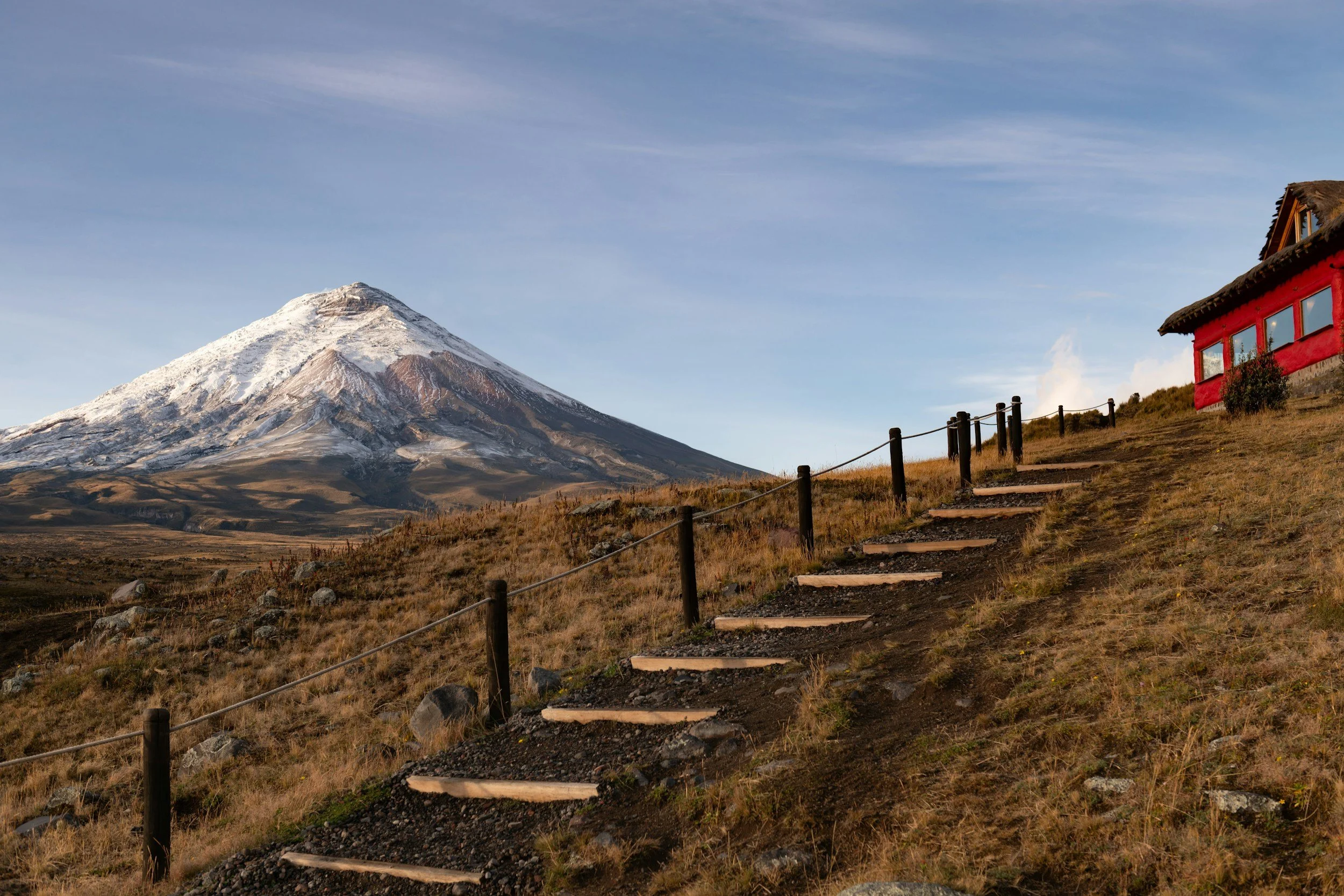
THE INFAMOUS ECUADORIAN VOLCANOS
Cotopaxi, Cayambe & Chimborazo
Three glaciated volcanoes, progressive acclimatization, and hands-on alpine skills training across Ecuador’s high Andes — designed as a first step into high-altitude mountaineering.
Location
Quito, Ecuador
Duration
11 DAYS
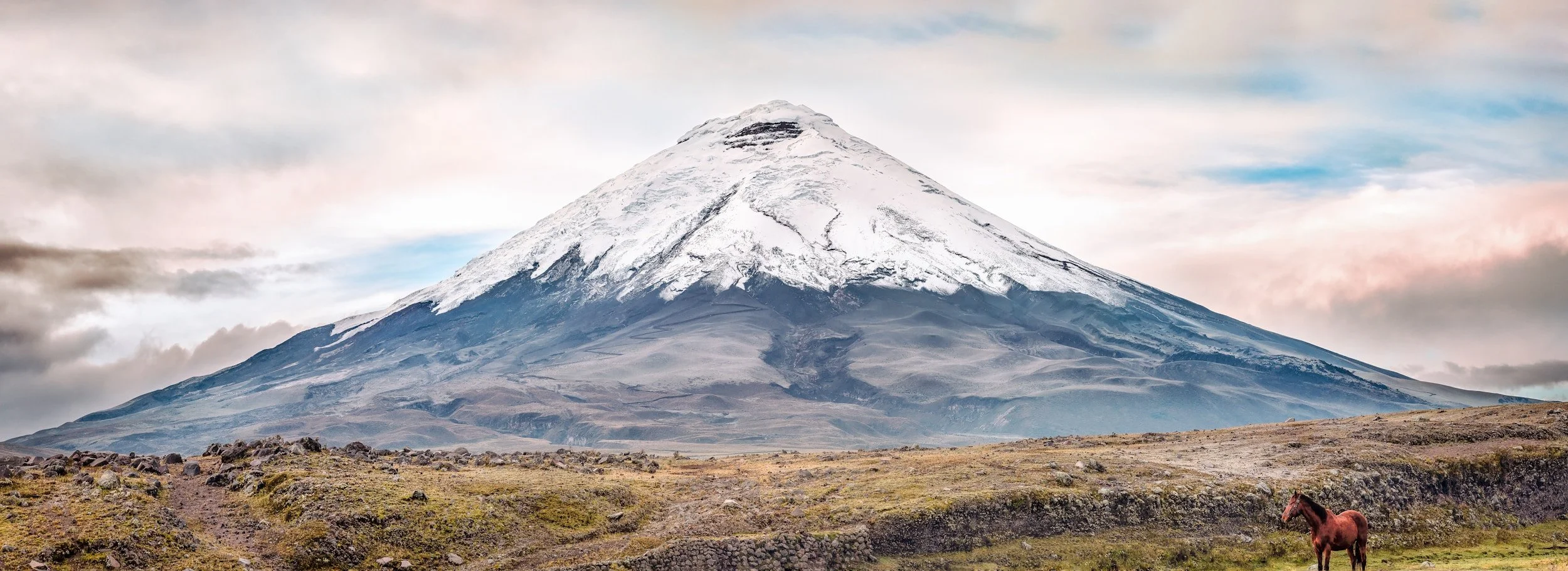
Cotopaxi, Cayambe, and Chimborazo form a natural high-altitude progression, building from foundational glacier travel to a true test at extreme elevation. You’ll learn to move on snow and ice with crampons and an ice axe, apply those skills on increasingly demanding terrain, and culminate on Chimborazo—Ecuador’s highest peak. While technically straightforward, the altitude, cold, and length of summit days make this a serious endurance effort, requiring strong fitness, disciplined pacing, and proper acclimatization.
❋ Small, Private TeamsWith a maximum 1:2 guide ratio on summit day, pacing and decision-making are tailored to the team. This allows for a more controlled, safer, and higher-quality experience on the mountain.
❋ Built for Proper AcclimatizationThe itinerary is intentionally structured with progressive altitude exposure—from Quito to Rucu Pichincha to an intermediate lodge—before moving to the refuge. This staged approach allows your body to adapt gradually and sets you up for a stronger summit attempt.
❋ A Proven, Thoughtful ApproachWe prioritize pacing, recovery, and team dynamics to support a strong summit experience. You’ll leave with a summit certificate—and a clear understanding of what it takes to move well on a high-altitude glaciated mountain.
❋ Real Skills, Not Just a SummitYou’ll learn and practice essential mountaineering skills, including crampon technique, ice axe use, self-arrest basics, and rope travel. This is not just about reaching the top—it’s about building competence on snow and ice.
November 26: International arrival in Quito. After landing at Mariscal Sucre International Airport, a private transfer takes you to the hotel. After a welcome dinner, the remainder of the day is reserved for rest, hydration, and a low-key evening to begin acclimatizing to Quito’s elevation (~2,850 m / 9,350 ft).
November 27: Trip briefing and preparation day in Quito. The full itinerary is reviewed, gear is checked for fit and function, and key safety concepts are covered (pacing, layering systems, glacier basics, and altitude expectations). The day stays intentionally light to support early acclimatization. Hotel overnight in Quito.
November 28: Acclimatization climb on Rucu Pichincha (4,784 m / 15,700 ft). A morning ride on the TelefériQo lifts the group to high elevation, followed by a steady ascent toward the summit. This day provides a major “climb high, sleep low” acclimatization stimulus and a chance to evaluate pacing and altitude response. Return to Quito for overnight.
November 29: Transfer from Quito to an intermediate-altitude lodge in the Papagayo region (~11,500–12,500 ft). This staged move bridges the gap between Quito and the high refuge on Cotopaxi and helps the body adjust gradually. The afternoon is kept easy with optional light movement, hydration, and early rest.
November 30: Glacier skills training day on lower snow and glacier terrain. Instruction focuses on beginner competence and confidence in alpine movement: crampon technique, ice axe use, self-arrest fundamentals, rope travel basics, and efficient movement on snow. Return to the intermediate-altitude lodge for overnight.
December 1: Transfer to Cotopaxi National Park and move up to José Ribas Refuge (~4,800 m / 15,750 ft). The day includes a skills review and final equipment check, followed by an early dinner and rest. This night at the refuge sets the group up for a safe, well-paced summit attempt.
December 2: Summit attempt on Cotopaxi (5,897 m / 19,347 ft). A late-night alpine start leads into a steady ascent on snow and ice with strict pacing and conservative turnaround times. After the summit attempt, descend back to the refuge and continue down to lower elevation as conditions and group energy allow.
December 3: Recovery day with time to rest, recover, and reset after the Cotopaxi summit push.
December 4: Recovery and acclimatization day in Quito before transitioning toward the next objective.
December 5: Transfer to Cayambe Refuge for overnight at high altitude. Final equipment checks, hydration focus, and early rest before summit day.
December 6: Summit attempt on Cayambe (5,790 m / 18,996 ft), the highest point on Earth located directly on the equator. After the climb, descend fully and return to Quito for overnight recovery.
December 7: Transfer to Chimborazo Refuge and move into high camp preparations. The afternoon focuses on rest, hydration, and pacing ahead of the highest summit attempt of the expedition.
December 8: Summit attempt on Chimborazo (6,263 m / 20,548 ft), the highest mountain in Ecuador and the closest point on Earth to the sun due to the equatorial bulge. Descend after the summit push and return to Quito.
December 9: Built-in reserve day for Chimborazo due to weather, conditions, or acclimatization needs. This reserve day is already included in the expedition price.
December 10: Free day in Quito for recovery, sightseeing, cafés, markets, or additional rest after the climbing portion of the expedition.
December 11: International departure from Quito.
$3,915 per person
Based on a 6+ person group.
Dates: November 26th – December 11th
This Ecuador expedition combines acclimatization, glacier instruction, and high-altitude climbing across Cotopaxi, Cayambe, and Chimborazo. The itinerary is intentionally structured to build experience progressively while maximizing safety, acclimatization, and summit success.
What’s Included
- Welcome dinner
- Celebration dinner
- Certified summit certificate for each volcano
- Private airport transfers
- Botique hotels in Quito and the mountainside on Cotopaxi for acclimation
- All refuge bookings
- All transport to and from the mountains
- Dinner the night before summit days
- Breakfast the day of summit days
- Shared rope
- Guide at a 1:2 ratio
- Permits and fees
Not Included
- International airfare to and from Ecuador
- Transportation to and from Quito outside of the scheduled itinerary
- Personal travel insurance, including high-altitude rescue and evacuation
- Required personal gear (not provided unless rented separately)
- Mountaineering boots
- Crampons
- Ice axe
- Helmet
- Harness
- Sleeping bag
- Technical clothing and layers
- Personal medications
- Tips and gratuities for guides and drivers
- Alcoholic beverages, soft drinks, bottled or mineral water
- Extra snacks or personal purchases
- Wi-Fi, mobile calls, and charging of electronic devices (where available)
- Optional celebration champagne lunch at PapaGayo (approximately $10 USD, paid locally)
- Extra hotel nights due to early arrival, late departure, or itinerary changes
- Meals not outlined in the above section
- Additional costs caused by itinerary changes due to weather, volcanic activity, road conditions, or safety decisions made by guides or park authorities
Who This Trip Is For
This expedition is designed for those stepping into glaciated mountaineering for the first time, or building experience on high-altitude snow and ice.
Ecuador’s volcanos are often considered an ideal progression from trekking peaks like Kilimanjaro. They introduce technical elements—crampons, ice axe, rope travel—while remaining accessible to those with a strong endurance base. They enable climbers to experience multiple ascents to altitude making them a prime training ground for longer expedition pushes like Aconcagua and Denali.
This is a strong fit if you:
- Maintain a consistent fitness routine (running, hiking, skiing, etc.)
- Are comfortable moving for 6–8 hours with a pack at altitude
- Want to gain hands-on experience on snow and glacier terrain
- Are preparing for larger objectives like Denali or Aconcagua
You don’t need prior technical experience—but you do need to be prepared to learn, stay engaged, and move consistently in a demanding environment.
This is not designed as a casual climb. It’s for those who want to approach their first glaciated peak with intention, preparation, and respect for the mountain.
Fitness & Preparation
The Ecuadorian volcanos demand strong aerobic fitness, efficient movement, and the ability to perform at high altitude in cold, variable conditions.
You should be able to:
- Move uphill for 6–10 hours with a 10–15 lb pack for multiple days in a row
- Gain 3,500–4,500 ft of elevation in a day
- Maintain a slow, steady pace at altitude without extended breaks
- Recover effectively across consecutive days of effort
Training should focus on:
- Endurance: running, hiking, or sustained uphill movement
- Elevation gain: steep hiking, stair climbing, or incline training
- Strength: lower body and core stability for long ascents and descents
- Pack movement: training with a loaded pack to build efficiency and durability
We provide individualized guidance so you arrive prepared, efficient, and confident at altitude.
The Not-So-Fine Print
Altitude, Health & Safety
This itinerary is intentionally designed to prioritize acclimatization, skills development, and conservative decision-making to maximize safety and summit success for first-time glaciated climbers.
Any signs of AMS, HACE, or HAPE will result in an immediate descent. There are no exceptions. All continuation, turnaround, and summit decisions are made solely by the licensed Ecuadorian mountain guide, whose judgment is final.
Reaching the summit of Cotopaxi is never guaranteed. Summit decisions are based on weather, glacier conditions, group health, and individual performance. Fatigue above 15,000 ft is common—even with proper acclimatization—and should be expected.
Ash to Altitude coordinates logistics, preparation, and skills coaching. All guiding and on-mountain safety decisions are made by the licensed local guide, particularly while traveling on snow, ice, and glaciated terrain.
Minimum fitness requirement: Participants must be capable of hiking uphill for 6–8 hours at altitude, often in cold and windy conditions, while wearing mountaineering boots and carrying a small pack.
Altitude Considerations
Proper acclimatization depends on steady pacing, patience, and discipline. Gaining elevation too quickly or pushing the pace unnecessarily increases fatigue and significantly raises the risk of altitude illness.
The core principle is climb high, sleep low. The itinerary is intentionally structured to expose the body to higher elevations during acclimatization hikes while allowing recovery at lower sleeping altitudes before moving higher.
Alcohol and smoking are not permitted during the climb. Both impair acclimatization, increase dehydration, and negatively affect recovery—especially at altitude.
Hydration is non-negotiable. Drink consistently throughout the day. Appetite often decreases at altitude, but maintaining caloric intake is essential. If solid food is unappealing, prioritize soups, broths, teas, and other easily digestible calories.
Mindset matters. Altitude can amplify anxiety and negative thought loops. Staying present, communicating openly with your guide and teammates, and engaging with the environment supports both physical adaptation and overall experience.
Meals & Accommodations
Meals are provided as outlined in the itinerary and vary by location.
In Quito: meals are generally not included outside of the welcome and celebratory dinners, allowing flexibility for personal preferences.
At the José Ribas Refuge: lunch, dinner and breakfast are included prior to the summit attempt.
Food at altitude is simple, hearty, and functional. Western options may be limited.
Accommodations range from city hotels in Quito to mountain lodges at intermediate altitude and basic refuge lodging at José Ribas Refuge. Refuge accommodations are dorm-style with shared facilities and limited amenities. Heating is minimal, and sleeping conditions are cold.
Weather, Conditions & Summit Outcomes
Late November and early December generally offer stable climbing conditions on Cotopaxi, but mountain weather is inherently unpredictable. High winds, storms, or changing glacier conditions may affect the itinerary.
No refunds will be issued for:
- Inability to summit due to weather or glacier conditions
- Guide decisions to turn around, delay, or cancel a summit attempt for safety
- Fatigue, altitude illness, or inability to continue
- Schedule changes, acclimatization adjustments, or partial completion of the climb
All decisions are made conservatively and always in the interest of safety.
One reserve day for Chimborazo is already built into the itinerary and included in the expedition cost. Additional summit attempts beyond the included reserve day may incur additional refuge and guide fees based on availability and conditions.
-
No prior technical climbing experience is required. This expedition is designed as an introduction to glaciated mountaineering. You’ll learn essential skills—including crampon use, ice axe technique, and glacier travel—during the trip.
-
Yes. Gear rentals can be coordinated in advance—please reach out for assistance selecting and reserving equipment.
-
Altitude. All three peaks exceed 18,000 ft, and Chimborazo reaches over 20,500 ft. Even with proper acclimatization, the thin air, cold temperatures, and long summit days make this a physically and mentally demanding objective.
-
There is no guarantee of summiting. Success depends on weather, glacier conditions, and individual acclimatization and performance. The itinerary is designed to maximize your chances through a structured progression and built-in contingency days.
-
In Quito, you’ll stay in comfortable hotels. At intermediate altitude, accommodations are in mountain lodges or haciendas. On the mountains, refuges are basic, dorm-style, with shared facilities and minimal heating.
-
You’ll need standard mountaineering equipment, including boots, crampons, ice axe, helmet, and proper layering systems. A detailed packing list is provided, and rental coordination is available if needed.
-
You’ll be led by professional, bilingual, nationally licensed Ecuadorian mountain guides, with a maximum ratio of 1 guide per 2 climbers to ensure safety and support.
FAQ