

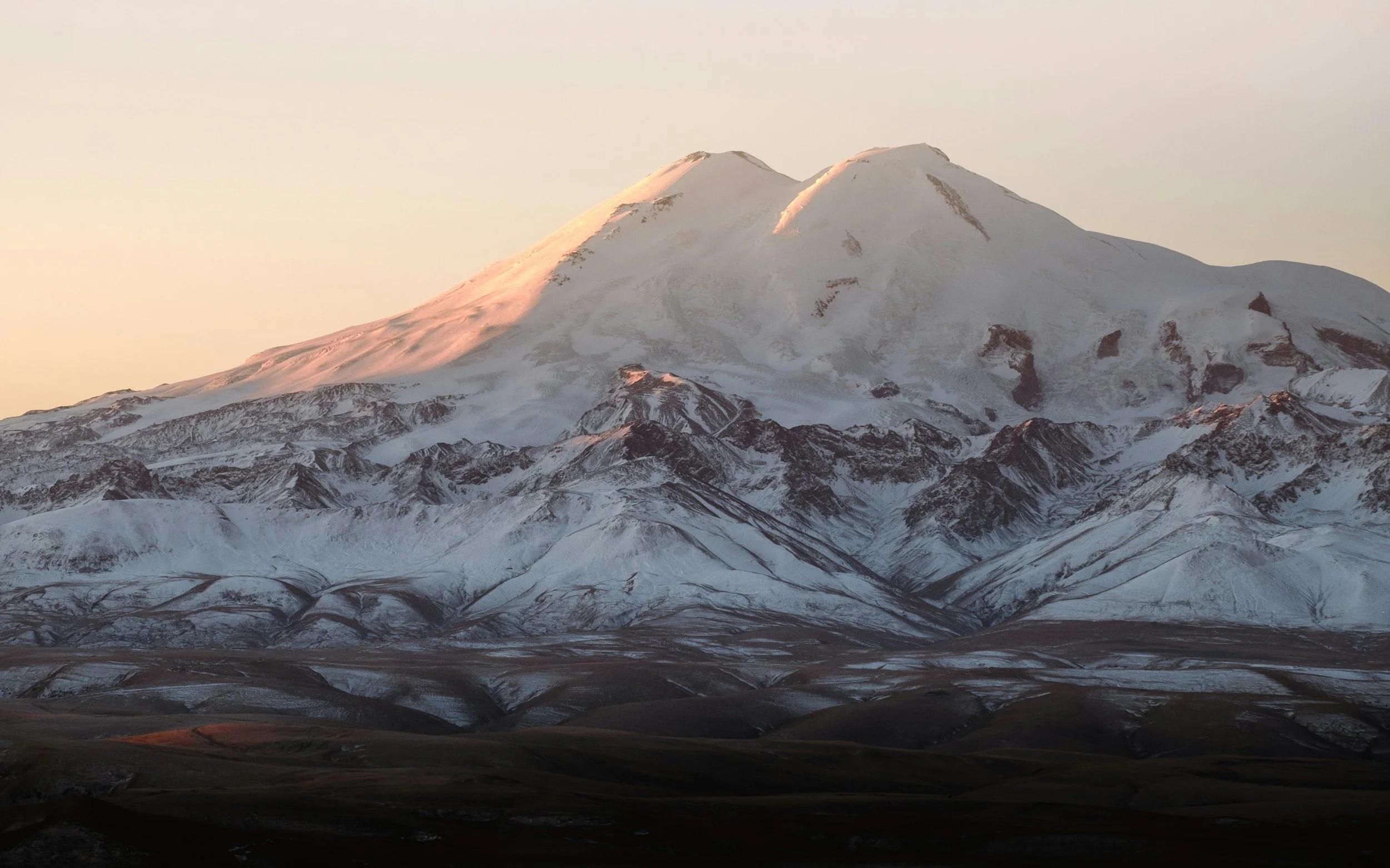
SUMMIT THE ENTERAL MOUNTAIN
Elbrus
A glaciated ascent to the highest point in Europe — combining high-altitude mountaineering, progressive acclimatization, and the challenge of one of the world’s iconic Seven Summits.
Location
Mineralnye Vody, Russia
Duration
8 DAYS
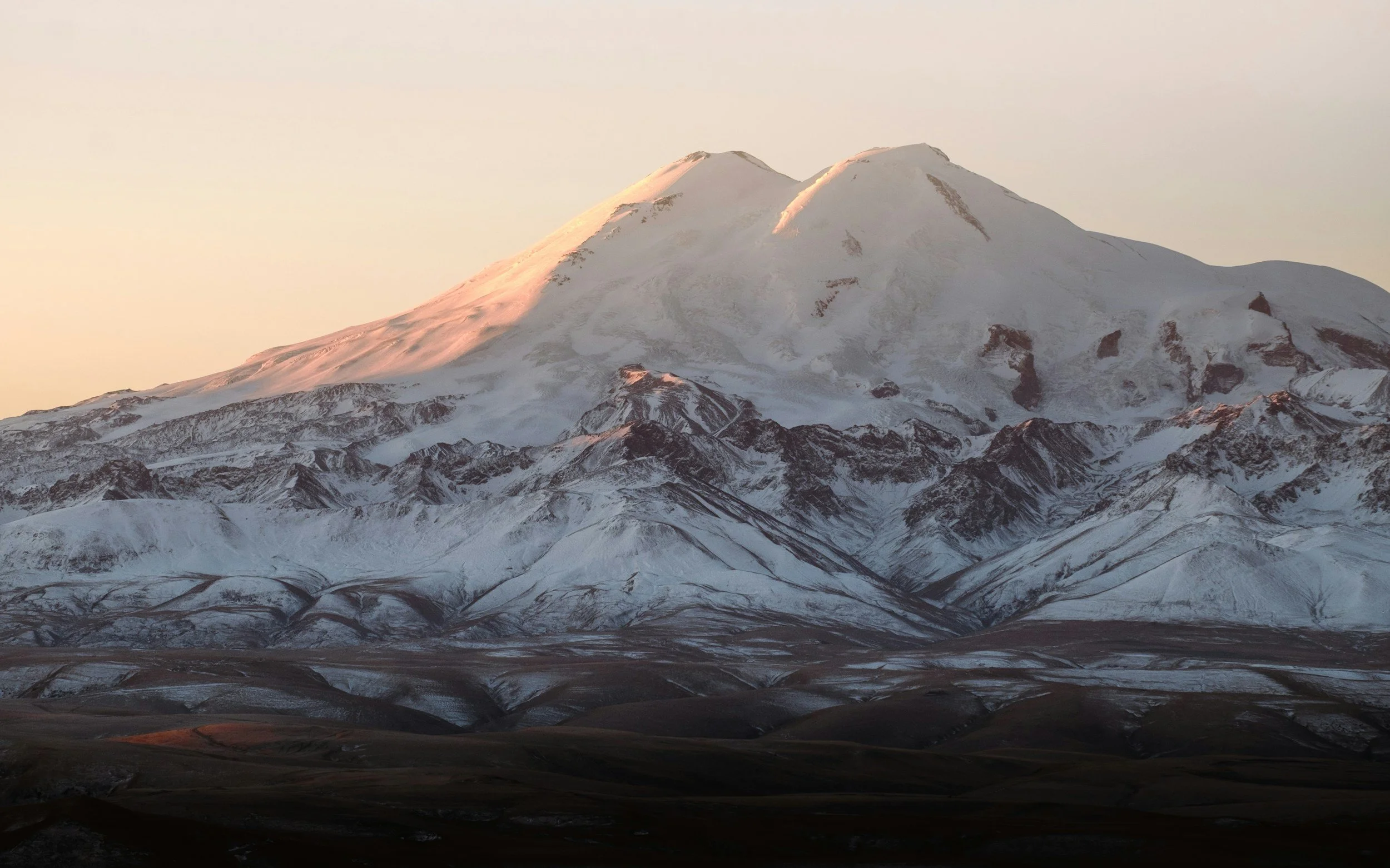
At 18,510 ft / 5,642 m, Mount Elbrus is the highest mountain in Europe and one of the most iconic objectives on the Seven Summits. Although the standard south route is considered non-technical in stable conditions, Elbrus is a serious high-altitude climb defined by glaciated terrain, cold temperatures, rapidly changing weather, and a long summit day that demands strong fitness, disciplined pacing, and real resilience.
❋ Americans Who’ve Actually Done ItWe completed this exact expedition as U.S. travelers in 2025 using the same local operator and understand firsthand the realities of Russian visas, routing, banking restrictions, border logistics, and in-country travel. We’re happy to provide hands-on support throughout the process — from visa coordination and flight planning to answering the practical questions that come with traveling to Russia for a mountaineering expedition.
❋ Built for Better AcclimatizationThis itinerary is intentionally structured to move higher gradually rather than rushing climbers up the mountain. Sleeping first in Cheget, then moving through intermediate elevation before high camp, creates a more effective acclimatization profile than faster itineraries that push too high too early.
Day 1: Arrival in Mineralnye Vody. Transfer to Cheget. Meet your guide. Arrive in Mineralnye Vody by 14:00. For early or late arrivals, we can arrange a private transfer for $90-100 (for up to 3 people). A group transfer will take us to Cheget Glade (2000 m), at the foot of Elbrus. The 185 km drive takes about 3 hours. Upon arrival, we will check into the hotel and enjoy a welcome dinner with an itinerary briefing in the evening. Overnight at the hotel.
Day 2: Acclimatization at Cheget-2 Station (3050 m). Acclimatization hike past the “Maiden Braids” waterfall (2,800 m) to the RAS Observatory (3,100 m), or along the slopes of Mount Cheget, from Cheget-2 Station (2,750 m) — near the famous "Ai" café — to Cheget-3 Station (3,050 m). After returning to the hotel: gear check and rental of any missing mountaineering equipment. Overnight at the hotel.
Day 3: Transfer to Cheeper-Azau (3000 m) and Acclimatization Hike (up to 3850 m). In the morning, pack your climbing equipment; unnecessary items can be left in the hotel’s storage. We will transfer to the Cheeper-Azau Hotel after a short 3 km drive to the Azau Glade. A cable car will take us to the Stary Krugozor station, where we check into the hotel and have lunch. In the afternoon, we hike past the Sarykaya-Su waterfall to the Mir station (3450 m) or a nearby glacial lake. Depending on the group’s condition and weather, we may continue to the Gara-Bashi station (3850 m). Overnight at the Cheeper-Azau Hotel.
Spending the night at this altitude is a crucial part of the program, allowing for effective temporary acclimatization. Most climbing programs on Mt. Elbrus involve a direct ascent from hotels in Cheget, Terskol, or Azau (2100–2300 m) to high-altitude accommodations at 3800–3900 m. Such rapid altitude changes often result in headaches, insomnia, and serious physical discomfort. Unlike these standard approaches, our program ensures a smooth and gradual acclimatization process, significantly reducing the risk of altitude sickness and improving overall performance during the climb.
Day 4: Climb to Pastukhova Rocks (up to 4800 m). Snow and ice activities. We take the cable car to Gara-Bashi (3847 m) and check into either the Heart of Elbrus Hotel (3820 m) or the Leaprus Eco-Hotel (3910 m). After preparing climbing equipment, we begin an acclimatization hike to the Pastukhova Rocks (4600–4800 m). Training includes crampon use, self-arrest techniques, and rope work. Return to the Cheeper-Azau Hotel for dinner and overnight stay.
Day 5: Rest day. Snow and ice training (3820 m). Rest is vital before the summit. After a late breakfast, we transfer to the high-altitude camp (Heart of Elbrus or Leaprus). The day focuses on snow and ice techniques, including knot-tying. Leisure activities such as board games, discussions, and equipment checks will help prepare for an early departure. Overnight in high camp.
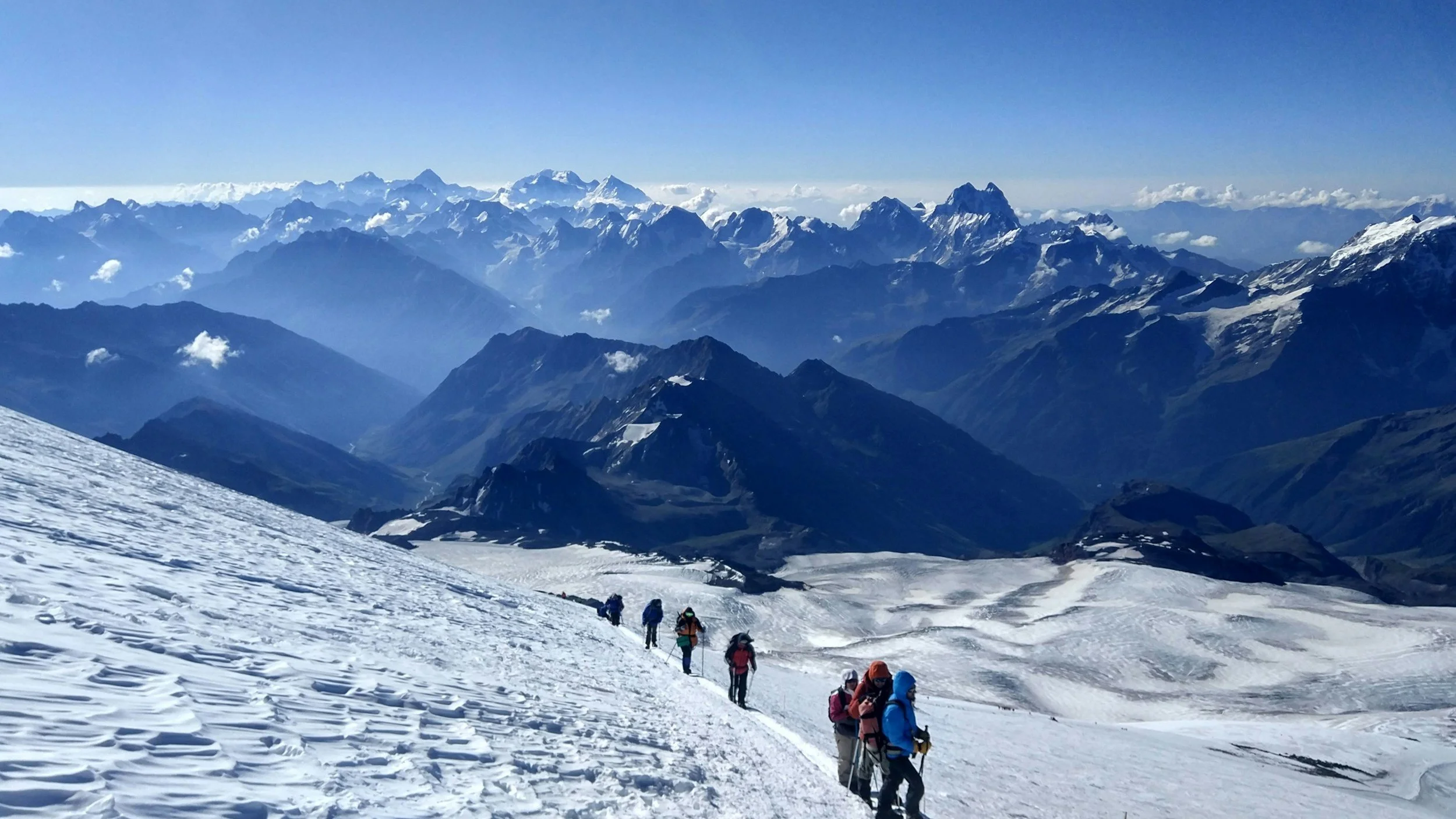
Day 6: Summit Day (3820 m – 5642 m – 3820 m). The climb begins early with a light breakfast. Participants can use a snowcat to ascend to the Pastukhova Rocks (4800 m) or Kosaya Shelf (5100 m) for an additional fee. If a snowcat is booked, departure is around 4:00 am. The trekking group, consisting of at least 3 people with one or more "assistant guides," will begin their ascent 3–4 hours earlier than the main group. If fewer than 3 participants wish to ascend without a snowcat, a personal guide must be hired at an additional cost. Please note, if any participant is unable to continue due to illness or other reasons, the remaining 1–2 participants and the guide will descend as a smaller group.
In the event of a forced descent from lower altitudes (up to 4500 m), a second attempt at the ascent on the same day is possible, provided the descent is made to the mountain hotel before the main group departs. The participant can then rejoin the main guide and the rest of the group for the ascent.
After crossing the Kosaya Shelf and reaching the Elbrus saddle at 5300 m, you can take a rest, have a snack, and warm up with hot tea. The final push to the West Summit of Elbrus (5642 m) usually takes place between 10:00 and 13:00, depending on the group’s pace. By 14:00, all participants must begin their descent, which typically takes 5–6 hours. Dinner and overnight stay will be at the high camp.
Day 7: Reserve day. Descent to the Cheget (3820 m – 3000 m). This day serves as a weather reserve or a celebration day after a successful summit. We descend to the Cheget Glade and enjoy activities such as exploring the Chegem Waterfalls, Lake Gizhgit, or Geduko Thermal Complex (optional, extra fee). A festive dinner with climbing certificates concludes the day. Overnight at the hotel.
Day 8: Transfer to Mineralnye Vody Airport. After breakfast, we transfer to the Mineralnye Vody Airport by 10:00 am. To avoid stress, we recommend booking return flights for the afternoon. If your return flight is scheduled earlier or significantly later, and you prefer not to wait at the airport, you may book a private transfer for $80.
Dates
- 31 May – 07 June
- 14 June – 21 June
- 01 July – 08 July
- 08 July – 15 July
- 26 July – 02 August
- 29 July – 05 August
- 19 August – 26 August
- 23 August – 30 August
- 27 September – 04 October
Group size: Small group departures
Trip length: 8 days
Accommodation Packages on the South Side of Mount Elbrus
Standard: $2,500 per person
Cheget Glade Hotels: "Snezhny Bars," "Smile," or "Sunny Glade" (2-3 bedded rooms).
Mountain hotel "Cheeper-Azau" (5-8 bedded rooms with private bathroom).
Mountain hotel "Heart of Elbrus" (8 bedded rooms with shared facilities).
Comfort: $2,900 per person
Cheget Glade Hotels: Superior single or twin rooms.
Mountain hotel "Cheeper-Azau" (3-4 bedded rooms).
Mountain hotel "Heart of Elbrus" (4-bed rooms with shared bathroom on the floor).
VIP: $3,000 per person
Same as Comfort, but with accommodation in the panoramic eco-hotel “Leaprus” in place of Heart of Elbrus.
2027 Pricing Disclaimer
Due to regional payment and banking limitations, a portion of the expedition cost must be paid in cash in-country. This is standard for expeditions operating in Russia.
All pricing listed reflects current operator rates and anticipated logistics costs. Final pricing may change based on local operator adjustments, hotel pricing, transportation costs, visa processing changes, and currency fluctuations. Because this program requires additional coordination for U.S. travelers—including visa support and flight booking assistance—Ash to Altitude pricing includes service layers beyond the local operator’s base rate.
Final trip pricing will be confirmed at the time of booking or once 2027 operating costs are finalized by local partners, whichever comes later. Any increase will be communicated clearly in writing prior to final payment collection. Pricing will not be increased after final payment unless a direct regulatory or operator-imposed cost is added with no reasonable advance notice.
Included
- Pre-trip support from Ash to Altitude, including training guidance, gear advice, packing review, and expedition preparation
- Coordination and support for the Russian visa process for U.S. participants
- Flight coordination and booking assistance for required travel related to the expedition (airfare not included)
- Licensed local mountain guide(s)
- Group airport transfer from Mineralnye Vody to Cheget on scheduled arrival day
- Group airport transfer from Cheget to Mineralnye Vody on scheduled departure day
- Hotel accommodation in Cheget for nights explicitly listed in the itinerary, based on twin-share rooms
- Mountain accommodation during the ascent program based on selected package level
- Cable car transfers as outlined in the itinerary
- Acclimatization hikes and summit program as described
- Snow and ice training, including crampon use, self-arrest, and basic rope skills
- Guide wages, accommodation, food, and logistical support during the expedition
- Welcome dinner and celebration dinner
- Climbing certificate upon successful completion
Not Included
- International airfare to and from Russia
- Russian visa fees, consular fees, courier fees, or document procurement costs
- Personal travel insurance, including medical, rescue, and evacuation coverage
- Personal mountaineering clothing, footwear, equipment, and medications
- Equipment rental for missing mountaineering gear
- Meals not explicitly included by the local operator at hotels or during transit
- Private airport transfers for early or late arrivals/departures
- Snowcat assistance on summit day
- Additional guide fees if required for participants ascending without snowcat under minimum group requirements
- Optional sightseeing or recovery activities on Day 7
- Expenses of a personal nature, including but not limited to:
- Tips and gratuities
- Alcoholic beverages, snacks, and personal purchases
- Extra hotel nights due to early arrival, late departure, or travel disruption
- Wi-Fi, laundry, charging, or other incidentals
- Additional costs caused by itinerary changes due to weather, political conditions, transportation disruption, or force majeure
Optional Add-On
On-expedition support from Ash to Altitude founder Nicole Otake, including travel alongside the group for added continuity and participant support. Available on a limited basis at additional cost, depending on expedition logistics, group size, and travel alignment.
Who This Is For
This expedition is designed for strong hikers, trekkers, and aspiring mountaineers who are ready to take on a serious high-altitude glaciated peak. Elbrus is often treated casually because the standard route is non-technical in stable conditions, but that framing is misleading—this is a real mountain that demands fitness, composure, and the ability to keep moving efficiently in cold, high, and often unforgiving conditions.
This is a strong fit for climbers who already have a solid endurance base and are ready for a bigger alpine objective. It works well for those building toward the Seven Summits, those stepping from trekking peaks into glaciated mountains, or those looking for a physically demanding but technically accessible high-altitude climb.
You do not need advanced alpine skills to join, but you should arrive ready to work, adapt, and handle discomfort well. This is not a casual vacation climb, and it is not designed for someone hoping fitness can be improvised once they arrive. Elbrus rewards preparation, patience, and a calm, disciplined approach.
This expedition is a strong fit if you:
- Maintain a consistent endurance-based fitness routine
- Are comfortable hiking uphill for multiple days in a row
- Can carry a daypack at altitude in cold conditions
- Want a true Seven Summits objective without advanced technical climbing
- Are prepared to train in advance and take acclimatization seriously
Fitness and Prep
Mount Elbrus requires a strong aerobic base, steady pacing, and the ability to tolerate multiple days of movement at altitude. Success depends less on speed than on durability: being able to climb consistently, recover well, and keep functioning in cold, windy conditions when fatigue starts to accumulate.
You should be able to:
- Sustain 6–10 hours of movement on summit day
- Hike uphill for multiple consecutive days with a light to moderate daypack
- Gain 3,000–4,500 ft of elevation in a day without falling apart
- Recover well between efforts at altitude
- Move efficiently in crampons on snow
Training should focus on:
- Aerobic endurance
- Elevation gain or incline work
- Lower body strength and muscular endurance
- Loaded uphill movement
- Cold-weather systems and layering practice
We provide pre-trip guidance on training, gear, pacing, and expedition preparation so you arrive with a clear plan—not guesswork.
The Not-So-Fine Print
Altitude, Health & Safety
Mount Elbrus is a high-altitude glaciated peak, and altitude illness is a real and serious risk. Any signs of AMS, HACE, or HAPE will result in immediate descent. There are no exceptions. All guide decisions regarding pacing, acclimatization, turnaround times, snowcat use, or descent are final.
No summit is guaranteed. Weather, wind, visibility, snow conditions, and participant health may all affect the outcome of the expedition. Ash to Altitude supports preparation, coordination, and continuity, but all on-mountain guiding and safety decisions are made by the licensed local mountain guide team.
Fitness Requirement
This is not a beginner trekking trip. Participants should arrive able to sustain multiple days of uphill movement at altitude, carry a daypack comfortably, and tolerate cold, fatigue, and long summit efforts. A strong aerobic base, hiking fitness, and mental resilience are required.
Acclimatization
Proper acclimatization is central to success on Elbrus. This itinerary is intentionally designed to reduce the stress of abrupt altitude gain by progressively moving higher over multiple days. Even with a strong itinerary, altitude affects everyone differently. Headaches, poor sleep, low appetite, and fatigue are common and should be expected.
Snowcat Use
Snowcat assistance is optional and not included in the trip price. Many climbers use a snowcat to preserve energy and improve summit-day efficiency. Whether to ascend on foot or with assistance should be treated as a tactical decision, not a purity test. Conditions, pace, group size, and safety all matter.
While Elbrus is often guided with mechanical assistance options, this expedition still requires sustained effort at altitude. Participants should be prepared to climb for multiple hours in cold, high-altitude conditions regardless of chosen strategy.
Weather, Route Conditions & Summit Outcomes
Elbrus is notorious for fast-changing weather and whiteout conditions. Strong winds and freezing temperatures can turn an otherwise straightforward route into a serious mountaineering day. No refunds will be issued for:
- inability to summit due to weather or mountain conditions
- guide decisions to turn around or adjust the plan for safety
- fatigue, illness, or altitude-related performance issues
- route, timing, or accommodation adjustments caused by mountain conditions or logistics
Travel & Visa Realities
Travel to Russia requires more logistical preparation than most Seven Summits destinations, especially for U.S. travelers. Visa processing, passport surrender during application, banking restrictions, and geopolitical shifts all need to be taken seriously well in advance.
Travel to Russia comes with additional logistical complexity, especially for U.S. travelers. Visa processing timelines, payment restrictions, banking limitations, and routing changes may affect planning. Participants are responsible for maintaining a valid passport and complying with all entry requirements. Ash to Altitude will assist with the process but cannot guarantee approval, border entry, or uninterrupted geopolitical conditions.
For U.S. citizens, obtaining a Russian visa is a more involved process than most other Seven Summits destinations. Applicants must surrender their original passport during processing and will need to coordinate through the Russian consular or visa-center system (commonly via New York or another authorized U.S. processing office).
Money, Payments & Cash Requirements
Due to current financial restrictions, U.S.-issued credit cards, debit cards, and most international payment systems should be assumed not to function in Russia. Travelers should assume they will not be able to access funds electronically during the trip.
This means:
- Credit and debit cards issued by U.S. banks will not work
- Apple Pay, Google Pay, and other digital wallets will not work
- ATM withdrawals using U.S. cards are not reliable and should not be depended on
- International wire transfers are not a practical solution while in-country
As a result, cash is the primary and most reliable form of payment throughout the expedition.
Required Cash to Bring
- Standard Package: $1,200 USD
- Comfort Package: $1,500 USD
- VIP Package: $1,600 USD
In addition to the required operator payment for your selected package, participants should bring at least $1,000 USD for personal expenses.
All cash must be in clean, undamaged USD bills suitable for exchange.
Personal Expenses May Include:
- Tips for guides, drivers, and staff
- Meals not included in the itinerary
- Snacks and additional food
- Personal purchases and souvenirs
- Incidentals (coffee, small services, etc.)
Important Notes
- Bills should be newer, crisp USD notes (no tears, markings, or heavy wear), as damaged bills may not be accepted
- Exchange rates and availability may vary depending on location and timing
- Access to additional cash once in-country is extremely limited, so plan conservatively and arrive fully prepared with all required funds for the duration of the expedition.
Because of these constraints, financial planning for this expedition must be done in advance. Ash to Altitude will provide guidance prior to departure, but participants are ultimately responsible for ensuring they have adequate accessible funds for the duration of the trip.
Participants are responsible for safely transporting required cash. Ash to Altitude is not liable for lost, stolen, or unusable currency.
Insurance Is Required
All participants must carry comprehensive travel insurance that includes high-altitude mountaineering coverage, emergency medical care, rescue and evacuation, and trip interruption protection.
Proof of insurance may be required prior to departure.
Mountain Conditions Rule Everything
No summit is guaranteed, and all decisions regarding pace, snowcat use, turnaround times, and descent are made by the licensed local guide team. This expedition is designed conservatively, and safety always comes before summit outcomes.
Mount Elbrus – Essential Packing List
General Essentials
- 70–90L expedition pack
- Duffel bag for hotel/storage items
- 4-season sleeping bag appropriate for high camp
- Trekking poles
- Headlamp with spare batteries
- Water bottles / insulated bottles
- Personal medications
- Toiletries and small towel
- Power bank
- Passport and travel documents
Technical Equipment
- Mountaineering boots compatible with crampons
- Crampons
- Ice axe
- Harness
- Helmet
- 2 locking Carabiners
- Glacier sunglasses / Category 4 eye protection
- Goggles
Upper Body
- 2–3 technical base layers
- Fleece or active midlayer
- Insulated jacket
- Heavy down parka
- Waterproof shell jacket
Lower Body
- Thermal base layer bottoms
- Softshell climbing pants
- Waterproof shell pants
- Insulated pants if needed for cold tolerance
Hands
- Liner gloves
- Softshell gloves
- Heavy insulated mitts or gloves
Feet
- Wool socks
- Liner socks
- Camp shoes or hut shoes
Head & Face
- Sun hat
- Warm hat
- Buff / balaclava
- Sunscreen
- SPF lip balm
Hydration & Nutrition
- Electrolytes
- Favorite summit snacks / gels / chews
- Thermos optional
Equipment Rentals
Please email nicole@ashtoaltitude.com for equipment rental needs or questions about required gear.
FAQ
-
No advanced technical climbing experience is required for the standard south route in stable conditions. You should, however, have strong fitness and be prepared to move efficiently on snow at altitude.
-
It can be, for the right person. Elbrus is technically straightforward compared with many alpine climbs, but the altitude, weather, and summit-day demands make it a serious first glacier mountain rather than an easy one.
-
Summit day is long, cold, and highly dependent on weather, wind, and snow conditions. Even with snowcat assistance, climbers should expect multiple hours of sustained effort at very high altitude.
-
No. Snowcat assistance is optional and not included in the trip price. Whether to use it should be based on conditions, group dynamics, and the best overall summit strategy.
-
Yes. Russia is safe for travelers, even tourists from the USA. If you would prefer to be accompanied by an American citizen, please inquire for the cost of Nicole or Rocco accompanying you to the summit.
-
Due to current financial restrictions in Russia, U.S.-issued cards and digital payment systems should be assumed not to work. A required portion of the operator cost must be paid in cash on arrival, and participants should also bring additional cash for personal expenses.
-
At minimum:
Standard: $1,200 USD
Comfort: $1,500 USD
VIP: $1,600 USD
You should also bring at least $1,000 USD extra for meals, tips, incidentals, and personal expenses.
-
Yes. Ash to Altitude provides coordination and support for U.S. participants navigating the visa process, though visa fees and document costs are not included.
-
Standard — $2,500
Cheget Glade hotels: Snezhny Bars, Smile, or Sunny Glade
Mountain hotel Cheeper-Azau: 5–8 bedded rooms with private bathroom
Mountain hotel Heart of Elbrus: 8 bedded rooms with shared facilities
Comfort — $2,900
Cheget Glade hotels: superior single or twin rooms
Mountain hotel Cheeper-Azau: 3–4 bedded rooms
Mountain hotel Heart of Elbrus: 4-bed rooms with shared bathroom on the floor
VIP — $3,000
Same as Comfort, but with panoramic eco-hotel Leaprus replacing Heart of Elbrus